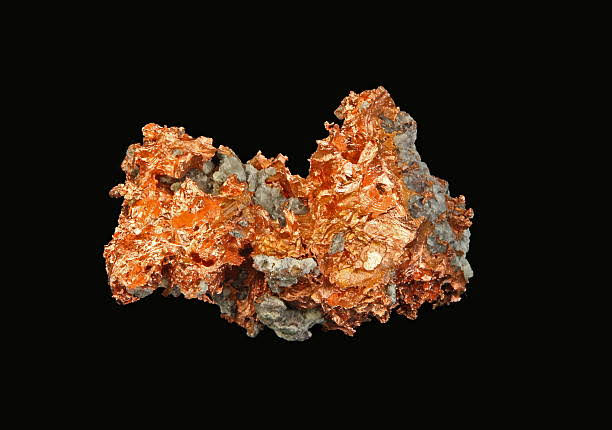
29Cu
Copper
Wiring and circuit boards. Chile mines more than anyone, followed by the Democratic Republic of the Congo and Peru.
Global Commodity Forum at Berkeley
The largest commodity club at UC Berkeley. We bring the people who mine, trade and move the world's raw materials to campus, and teach anyone who's curious how it all works.
Every phone, every power line, every EV parked on Telegraph started as rock in a desert somewhere. Most of us will never see that part. We think we should understand it anyway.

So we invite the people who do this for a living to come and tell us how it really works: geologists, traders, mine operators, analysts. Then we spend the rest of the semester digging in ourselves. We read the reports, teach each other the basics and argue about where prices are going. No finance background needed.
Five industries sit between a hillside in the Atacama and the wiring in your wall. Each one has its own economics, its own risks and its own people. That's what our speakers talk about.
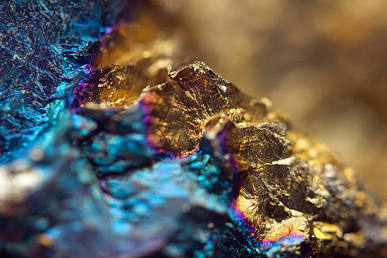
Find it. Geologists drill kilometers of core looking for ore like this bornite. A decade can pass before anyone commits to building a mine.

Dig it. A big open pit moves hundreds of thousands of tonnes of rock a day. Typical ore is less than one percent copper.

Concentrate it. The ore is crushed, ground and floated in froth until it's roughly a quarter copper. Then it ships, often across an ocean.

Smelt it. Melted down to about 99 percent copper. China runs roughly half of the world's smelting capacity.
Refine and trade it. Electrorefining produces 99.99 percent pure cathode. It trades in London, New York and Shanghai, then becomes the wire in your wall.
Your phone holds more of the periodic table than you'd think. Almost every piece of it comes from a handful of countries.
Wiring and circuit boards. Chile mines more than anyone, followed by the Democratic Republic of the Congo and Peru.
The battery cathode. About three quarters of it comes from the DRC.
The battery itself. Hard rock in Western Australia and salt flats in Chile and Argentina.
The solder holding every chip in place. Mostly China, Indonesia and Myanmar.
The magnets in your speaker. China mines most rare earths and refines even more.
We know you get plenty of requests, and student ones are easy to turn down. Here's why this one is worth an hour.
Send us a date and a topic. We take care of the room, the promotion and the rest. Campus or video call, whatever fits your calendar.
Most of us have never met anyone who runs a mine or a trading desk. One honest conversation is often what makes this industry feel like a real option.
Most of us didn't when we joined.
We're engineers, economists, Haas students, geology majors, and a few political science people who wanted to know why everyone keeps talking about critical minerals. Come to a speaker night, sit in on a teach-in, or just ask us something.
Join the clubWhether you'd like to speak, partner with us or join, send us a note. Someone from the team will reply by email.